Are you dreading stepping on your feet while getting out of bed every morning? Is the pain shooting through your heel unbearable?
You might be suffering from Plantar Fasciitis.
I have met quite a few clients over my last 10 years teaching Pilates who suffer every day when they get up, stand or walk.
A few years ago my husband Frank was one of them.
It only got better once he saw a physiotherapist and did some daily stretching exercises. Thankfully it never came back (so far) and I’m sure it has to do with his regular Pilates practice.
One in ten people suffers from plantar fasciitis during their lifetime. It is twice as common in women as it is in men and usually occurs between the ages of 40 and 60.
The plantar fascia is a thick band of connective tissue that runs from the heel to the toes and supports the arch of the foot. It also transmits the weight across the foot while you walk or run.
If you strain the plantar fascia repeatedly it causes little tears in the ligament. It gets swollen and inflamed which leads to pain.
Straining the plantar fascia can happen when
- your feet are rolling inwards too much while you walk.
- you have high arches or flat feet.
- you walk, stand, or run for long periods of time. Or if you started exercising like walking or running on hard surfaces.
- you are overweight. The extra weight puts more strain on your feet.
- you wear shoes that don’t fit well or are worn out.
- you have tight Achilles tendons or calf muscles.
- you have generally bad posture.
Plantar fasciitis is often confused with heel spurs. Both can result in heel pain, but they are two different conditions, even though they are often linked. About two thirds of patients develop heel spurs with plantar fasciitis.
Heel spurs are calcium deposits causing a bony protrusion on the underside of the heel bone.
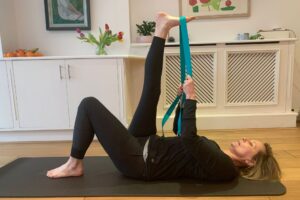
For immediate pain relief heat, ice, stretching exercises and massages can help.
But to find the cause of the tight plantar tissue it is important to look at the back line of the body – from the calf muscles all the way up to the hips. Very often the calf muscles are overworked and the buttocks underworked.
If you suffer from heel pain make sure you see your GP for best treatment advice.
GPs or physio therapists often recommend Pilates. As we all know, Pilates is a great way to even out muscle imbalances and helps with good posture.