The Essence of Stretching in Pilates
Stretching is an integral part of Pilates. It enhances flexibility, improves range of motion, and prevents injuries, making your Pilates sessions more effective and enjoyable.
Romana Kryzanowska, a legendary figure in the Pilates world and protégé of Joe Pilates, encapsulated Pilates in three words: “Stretch with Strength and Control.” This phrase highlights Pilates’s balanced approach toward stretching, combining it seamlessly with strength and control for a holistic workout experience.
Some people love the sensation of their muscles lengthening and relaxing, while others find it challenging, uncomfortable, or even painful.
There are different forms of stretching. Let’s look at the most common ones in the following paragraph.
The Types of Stretching: Understanding the Basics
To fully appreciate the role of stretching in Pilates, let’s explore the three basic types of stretching:
Static Stretching:
-
- Description: Involves holding a stretch for 20-30 seconds.
- Benefits: Excellent for increasing flexibility and cooling down after a workout. It reduces muscle tension, boosts blood flow, and promotes relaxation.
- Application in Pilates: Often used to conclude a Pilates class, helping your body to relax and recover.
Dynamic Stretching:
-
- Description: Involves moving parts of your body and gradually increasing reach, speed, or both.
- Benefits: Prepares muscles for exercise, improves functional movement, and enhances coordination. Perfect for warming up.
- Application in Pilates: Dynamic stretches like arm circles, shoulder rolls, and knee lifts are commonly used at the beginning of a class to prepare your body for the exercises ahead.
Proprioceptive Neuromuscular Facilitation (PNF):
-
- Description: An advanced form of flexibility training involving stretching and contracting the targeted muscle group.
- Benefits: Highly effective for increasing flexibility but should be done with caution and proper guidance.
- Application in Pilates: Used less frequently due to its advanced nature, but beneficial for those looking to deepen their stretch under professional supervision.
Static Stretching: Active vs. Passive
Within static stretching, there are two subtypes:
Active Static Stretching:
-
- Description: Holding a stretch position using the strength of your agonist muscles.
- Benefits: Increases flexibility, muscle strength, and endurance.
- Example in Pilates: Lifting your leg and holding it in position without external assistance.
Passive Static Stretching:
-
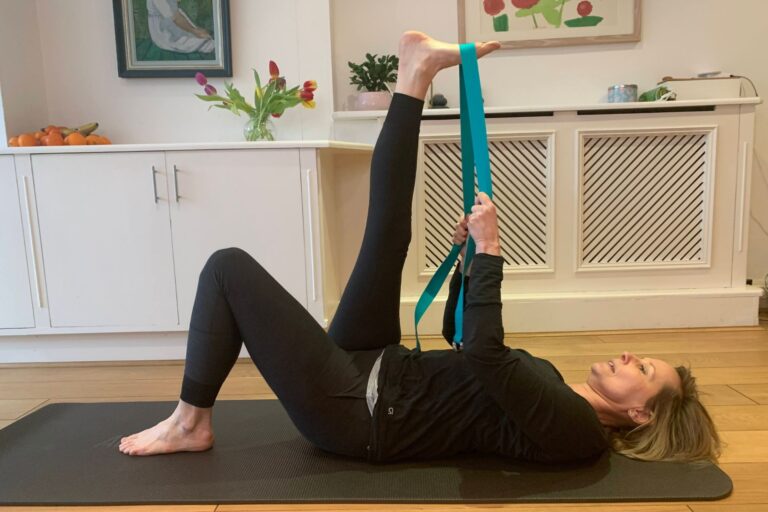
- Description: Holding a stretch with the help of an external force, such as a band, partner or gravity.
- Benefits: Focuses on muscle relaxation and elongation without requiring active muscular engagement.
- Example in Pilates: Using a resistance band to deepen a hamstring stretch or allowing gravity to assist in a seated forward fold.
Dynamic Stretching: A Closer Look
Dynamic stretching is a cornerstone of Pilates, involving controlled, active movements that prepare your body for the workout ahead. This type of stretching not only warms up your muscles but also improves coordination and functional movement. Many Pilates exercises incorporate dynamic stretching, such as the Roll Up, Single Leg Stretch, the Saw, and Swan Dive, to ensure a comprehensive and balanced workout.
Incorporating Stretching into Your Routine
Regular stretching can correct muscle imbalances, leading to better alignment and posture. Flexible muscles improve overall performance by allowing freer and more efficient movement. Additionally, stretching has a calming effect, reducing stress and promoting mental relaxation.
Embrace the Benefits
Incorporating both active and passive static stretches alongside dynamic stretching in your Pilates practice, you can maximize the benefits of stretching. This balanced approach enhances muscle function, promotes recovery, and supports your overall Pilates goals. Listen to your body, embrace the sensation of your muscles lengthening, and enjoy the sense of calm that comes with a good stretch.
Whether you love or hate stretching, embracing its benefits through Pilates can lead to a healthier, more flexible and more relaxed you.