Walking is an essential and natural form of exercise that humans have practiced throughout history. Dr. Andrew Weil, in his book Spontaneous Healing, says that walking is the “exercise” practiced by most of the world daily because it is most people’s primary form of transportation.
Walking was the most important adaptation and survival mechanism in human evolution. We evolved to walk long distances, with arms and shoulders that counterbalance our legs and hips. It was not uncommon for hunter-gatherers to walk up to eight miles a day to find food. Still, today, in many developing countries people will walk between five and ten miles a day just to get to and from work.
In this blog, we’ll explore how walking helps improve your brain and body connection, and why that cross-patterned movement of walking gives you some extra benefits you probably hadn’t considered before.
Walking is great for improving your overall health and fitness
Walking offers a multitude of health benefits that make it an ideal form of exercise. As an aerobic activity, walking helps improve cardiovascular health and overall fitness, but did you know that walking also strengthens the connection between the body and brain through several mechanisms:
Proprioception: Walking requires the brain to process information from various sensory receptors in the muscles, joints, and skin to maintain balance, posture, and spatial awareness. This continuous exchange of information between the body and brain enhances proprioception, which is the ability to sense the position and movement of our body parts in space.
Neuroplasticity: Engaging in regular physical activity like walking stimulates the production of new neurons (brain cells) and strengthens existing neural connections. This process, known as neuroplasticity, leads to improved brain function and better communication between different brain regions.
Cross-patterning: Walking is a cross-patterning movement where the arms swing in opposition to the legs. This motion promotes communication between the left and right hemispheres of the brain, improving overall cognitive function, coordination, and motor skills.
Increased blood flow: Walking increases blood flow to the brain, delivering essential nutrients and oxygen. This increased blood flow supports brain health, boosts cognitive function, and helps remove waste products that can accumulate in brain tissue.
Stress reduction: Walking, especially in natural environments, can help reduce stress and anxiety by triggering the release of endorphins, which are the body’s natural mood elevators. Lower stress levels contribute to improved brain function and mental clarity.
Forget the cross-fit trainer, walking is all about aerobic, coordinated movement!
As we walk, we swing our arms in opposition to the direction in which our legs and feet are moving. Cross patterning is essential for brain development (think of babies crawling), and helps the central nervous system learn to coordinate movement.
The cross-patterned movement of walking serves several important functions:
Balance and stability: The opposing movement of arms and legs helps to maintain balance and stability during walking. It provides a counterbalance for the movement of the lower body, reducing side-to-side sway and enhancing overall stability.
Coordination and motor skills: Cross-patterning helps improve communication between the left and right hemispheres of the brain, which is crucial for the development of motor skills, coordination, and overall cognitive function. It encourages the brain to integrate sensory input from both sides of the body, promoting more efficient and coordinated movement.
Energy conservation: The natural swinging of arms in opposition to the legs during walking reduces the energy required to maintain forward momentum. It helps to distribute the workload across multiple muscle groups, making walking a more efficient and less fatiguing form of locomotion.
Proprioception: Cross-patterned movement aids in the development of proprioception, the body’s ability to sense its position and movement in space. The coordinated movement of opposing limbs helps to fine-tune the brain’s awareness of the body’s position, improving balance and spatial awareness.
Enhancing your walking experience for optimal benefits
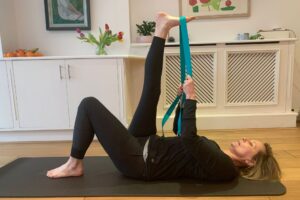
This video will help guide you to free the centre of the body and allow the hips to swing and shoulders to be free to encourage counterrotation of the body and help with walking.
As you walk, practice mindfulness by paying attention to your surroundings and immersing yourself in the environment. Take deep breaths to fill your lungs with fresh air and promote relaxation. Finally, be aware of your stride and adjust it as needed for comfort and efficiency. By incorporating these techniques, you can make the most of your walking experience and reap the full benefits of this natural form of exercise.
Walking, hiking, and moving outdoors stimulate the brain and calm the mind. Explore your environment, notice your surroundings, fill your lungs with air, and be aware of your stride. So find a destination–be it the grocery store, your local park, or a nearby mountain-and start walking. By taking that first step, you’ll be well on your way to enjoying the numerous benefits of walking as a form of exercise and transportation.