I’ve been teaching Pilates for over ten years now and heard quite a few misconceptions and preconceptions about this wonderful exercise technique that offers immense benefits to all of us.
So I wanted to bust 5 key myths about Pilates that I come across quite regularly.
> Myth 1 Pilates is like yoga
Yoga and Pilates may have some physical similarities, but their philosophies are different.
Yoga tends to have a more spiritual approach and has a much longer history than Pilates.
Dating back about five thousand years, the yoga practice includes diet, relaxation, mediation and breathing skills. Generally encompassing a much broader and more holistic lifestyle than Pilates.
Pilates is not an ancient practice. Joseph Pilates (1883 – 1967) was interested in the mechanics of the human body and was influenced by many different fitness and body & mind disciplines, but there is no evidence that he studied and practiced yoga seriously.
While Pilates and yoga are very complimentary practices, they are also very different.
Click on the link SHOULD I DO YOGA OR PILATES? to read more about the differences and similarities.
> Myth 2 Pilates is all about the core
I hear that one all the time. New clients contact me saying their physiotherapist has recommended Pilates to strengthen the core.
And yes, Pilates does work the deep abdominals and provides stability and freedom of movement throughout the body. This is one of the reasons why Pilates is so successful for people with back pain.
But, Pilates is not only about core strength and stability. It is a full body workout and trains the entire body as an integrated system. With Pilates you improve strength and balanced muscle development, flexibility and you increase your range of motion in your joints.
> Myth 3 Pilates is easy
Some exercises may look really simple and easy, but if you’re doing it correctly they can be a real challenge.
The great thing about Pilates is that the exercises can be modified to meet the individual’s needs. Most Pilates movements are performed slowly and controlled and that might be a reason why it’s perceived as easy.
The Pilates method can be used in rehabilitation, it is popular for pregnant women and for the older population. But I can assure you that Pilates offers challenges for even the fittest athletes like professional tennis, rugby and football players.
> Myth 4 Pilates is mostly for women
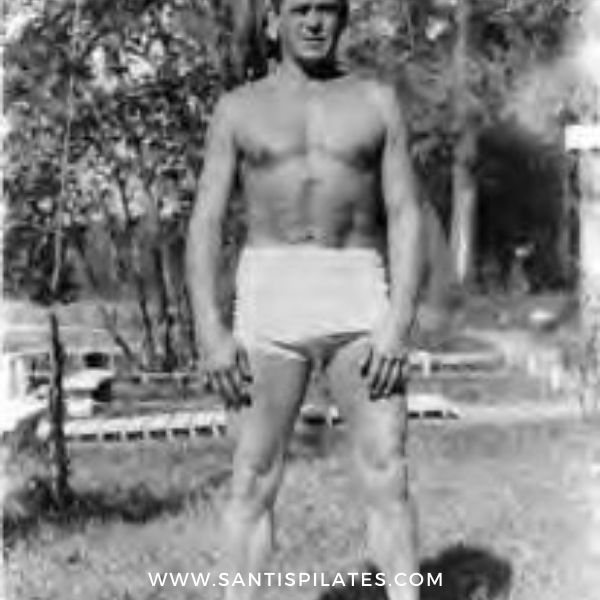
Pilates was invented by a man, Joseph Pilates, who was rather a macho man, if I can say so. And I’m sure he didn’t develop his method with only women in mind.
It is true that mostly women are attracted to this kind of exercise, but I see that this is changing now. In the studio where I work there are always men taking sessions and I also notice an increasing number of male clients asking for private Pilates sessions.
> Myth 5 Pilates is only for flexible people
When I say, I’m a Pilates teacher people often reply:”I can’t do Pilates, I’m too stiff and inflexible”.
But as I mentioned above, Pilates exercises can be modified to meet each client’s level and the exercises are geared to improve flexibility and suppleness.
With practice you will achieve a balance of strength and flexibility and greater joint mobility.
Please feel free to share this article with any Pilates sceptic you know. Who knows – you might change their life!